 Skip to content



Ask a room of five-year-olds what AI is, and you’ll get some wonderful answers. It’s a machine that “can do lots of things”. It’s a robot with a laptop in its head. It “can do things wrong”. And, from one particularly thoughtful child: it’s “a robot that helps people think more uniquely”. That last answer stayed with Liam Benjamin, Director of Creativity at Teach Me Quickly One More Time.
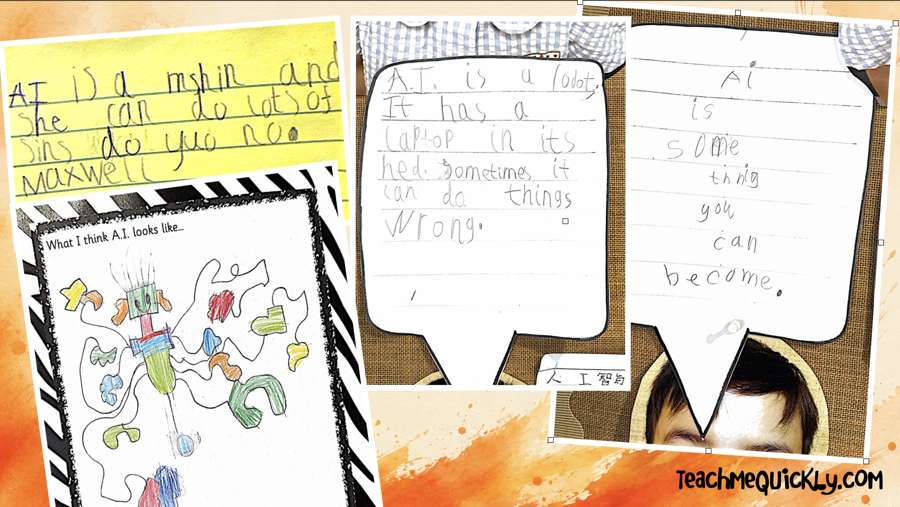
When he asked a room full of AI enthusiasts and professionals whether AI helps them think more uniquely, not a single hand went up. His workshop at AIFE Bangkok 2026 set out to close that gap, starting with the youngest learners.
1. Teaching is a creative profession
After 22 years in the classroom, much of it in early years, Liam felt he had hit a ceiling. He assumed it meant he needed a leadership role. In fact, it was a creative ceiling. So he founded a company built on one belief: teaching is a creative profession.
His session reflected that. Participants began by writing down a song that mattered to them and why: Luther Vandross, Linkin Park, Gorillaz, a Filipino ballad, Kenny Rogers. Every song goes onto a playlist Liam has built from his workshops around the world. It was a small reminder that we have more in common than we think.
2. Efficiency isn’t the point
Liam sees AI as the latest step in an “age of efficiency”: technology designed to get things done faster so we have more time for what we enjoy. As he joked, “If I’m efficient at something in a school, I tend to get given more work to do. That tends to be the problem.”
In early years, he argues, efficiency is the wrong goal. Young children are still learning to hold a pencil, sound out words and ask for help. Many staff and parents are rightly cautious about screens. What children need is play, curiosity and that hunger to find answers for themselves. So Liam set himself one guiding principle: introduce AI as a tool of creativity, not a tool of efficiency.

3. AI behind the scenes, children’s ideas at the centre
In Liam’s classroom, children never used AI directly. He did the prompting. They saw their own work go in and something new come back. A few of his favourite examples:
- Toys of the future: AI turned children’s drawn and described toys into photorealistic boxed toys, which rewarded better describing words (and taught them AI doesn’t always get it right).
- Zesty the Zebra: an AI-illustrated class story about listening that gave the class its year-long motto, “be stripe strong”.
- Lego challenges: AI suggested simple builds from a photo of loose bricks, printed as instruction booklets for children who needed a starting point.

For older students, Liam suggested reversing the process. Give children an illustration, have them write a description, and feed it to AI to see whose words come closest to the original.
4. Make it stranger
Liam closed with Ken Robinson’s warning that schools can educate children out of creativity. He arranges Robinson’s eight core competencies as a “Ken Cube”: a way to put any new idea, AI included, inside the box and then think outside it.
His advice for anyone prompting AI, adult or child, is simple: make it stranger.
AI tends to lead you down the corridor you point it towards. Being creative means stepping out of that corridor and asking for something weirder, funnier or more personal.
The takeaway: keep the magic
Liam’s approach puts the child’s imagination first and uses AI only to extend it, a little and often. As he reminded the room with a nod to Mary Poppins, in every job there’s an element of fun. Find the fun, and the job becomes a game.
If you remember one thing, he said, make it this: think more like a five-year-old.
Ideas that put children’s creativity at the heart of AI are exactly what AI and the Future of Education (AIFE) is about. Join educators from across the region at AIFE Dubai on 14–15 May 2027.
This blog post is generated by using an AI tool via audio recording of the actual sessions with consent from the presenters. The final product is also reviewed by both the organizer and presenters to ensure accuracy of information.


 LinkedIn
 X
 WhatsApp
 Bluesky
 Telegram
 Facebook