

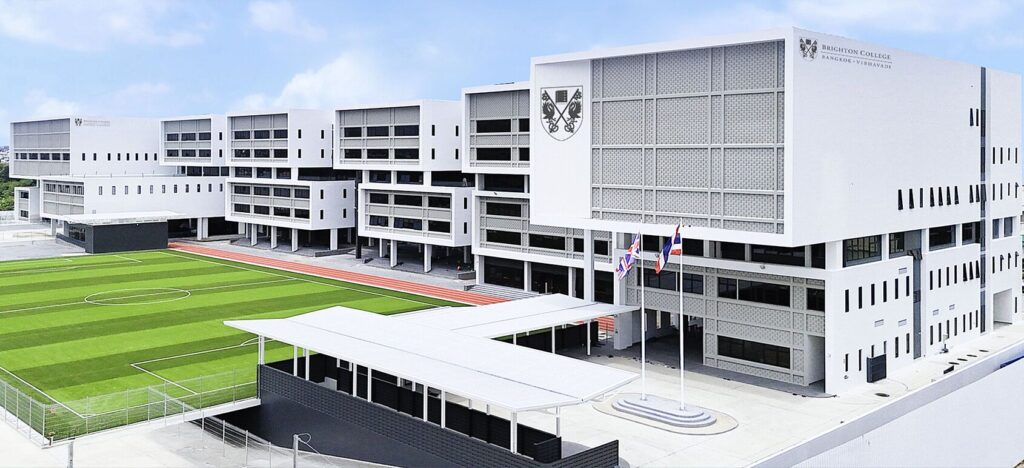
What if a school building could teach — without ever saying a word?
That’s the idea behind “the third teacher,” the philosophy at the heart of Brighton College Bangkok Vibhavadi’s campus, and the subject of the latest episode of Education Vanguard, 21CL’s podcast where we sit down with the school leaders quietly rewriting what great education looks like.
Brighton College Bangkok Vibhavadi was the public’s pick for the Public Choice Award for Innovative Facilities at the ASEAN School Awards 2026 — chosen not by a panel of judges, but by educators and communities across the region who saw something worth celebrating. See the their winning submission
To mark the win, 21CL’s CEO & Founder Justin Hardman sat down with Crispian Waterman, Headmaster of Brighton College Bangkok Vibhavadi, for a conversation about what happens when a campus is designed to teach as hard as its staff do.
“The environment communicates the expectations”
For Waterman, the third teacher isn’t really about architecture at all — it’s about what an environment tells a child without a single word being spoken. The first teacher is the person standing in front of the class; the second is the peers a child learns alongside; the third is the space itself. At Brighton College Bangkok Vibhavadi, that space is designed to say one thing consistently: explore, collaborate, ask questions, and make mistakes.
He’s careful, though, to draw a line between the building and the learning. A school’s design and technology hub, its science labs, its art spaces and libraries are all built to encourage particular behaviours — but the building itself doesn’t educate anyone. People do. What the campus creates, in Waterman’s framing, is opportunity: raw material that only becomes learning once teachers pick it up and run with it. As he puts it, a great teacher can teach well in a poor classroom, and a poor teacher will struggle even in the world’s most impressive facility — so the real investment, always, is in the pedagogy, not the square footage.
Three values, mapped to three spaces
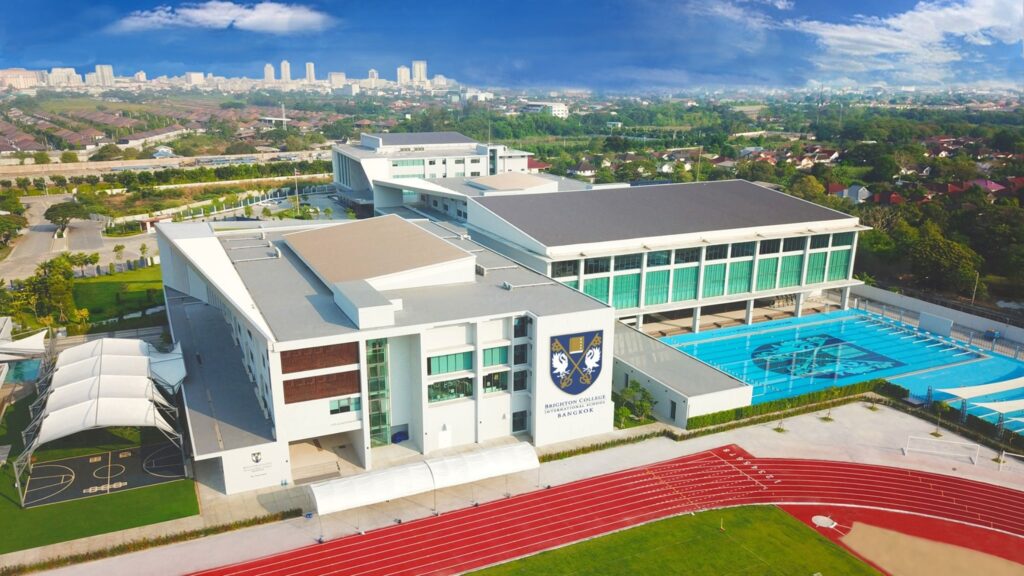
Brighton College Bangkok Vibhavadi’s three values — kindness, confidence, curiosity — aren’t just words on a website for Waterman. Walking through the conversation, he assigns each one a home on campus.
Curiosity lives in the maker space, the design and technology hub, and the university-grade science laboratories, where students are given room to experiment without needing a guaranteed outcome — to try something, get it wrong, recover, and try again.
Confidence belongs to the theatre, which Waterman describes as one of the most transformative spaces on campus: a child who lacks confidence can walk onto that stage and, given permission to be brave, be performing in front of hundreds of peers and family before long.
Kindness, by contrast, isn’t tied to a flagship room at all — Waterman locates it in the least glamorous corners of the school, the dining hall, the tutor rooms, the everyday spaces where houses and year groups simply spend unstructured time together and build a sense of belonging.
It’s a reminder that “innovative facilities” doesn’t only mean the flashiest room in the prospectus — sometimes the most important space on campus is the one nobody photographs.
British heritage, Thai identity
As one of a growing number of UK-heritage schools opening campuses in Bangkok, Brighton College Bangkok Vibhavadi has had to work out what travels well and what needs to adapt to a new context. Waterman is clear that the school’s core identity — its academic ambition, its focus on character development, and what he calls the “distinctive Brighton College confidence” to push pupils toward the best version of themselves — transfers easily to any country.
Thailand, though, isn’t just a location for the school, in his telling; it’s part of its identity. That means pupils get an outstanding British education while staying genuinely connected to the country they’re growing up in — its culture, history, language and traditions given real status within the life of the school, not treated as an add-on.
Measuring what the building can’t guarantee
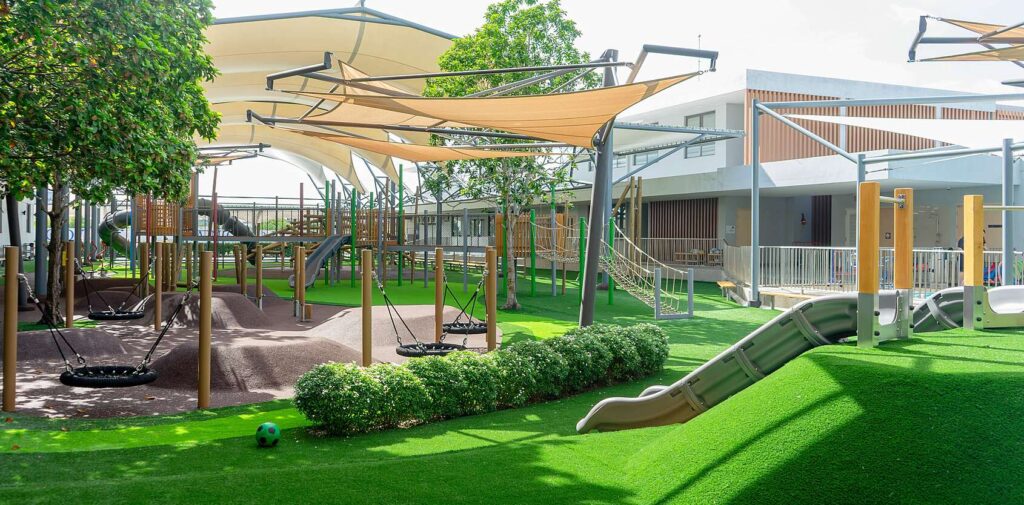
Wellbeing sits close to the centre of the school’s pitch, but Waterman is notably cautious about drawing a straight line from architecture to outcomes. He resists putting a number on how much any one building or facility “produces” a wellbeing result, arguing there are simply too many variables in a school to isolate cause and effect that cleanly.
Instead, the school triangulates a wide set of signals: pupil voice, parent feedback, staff observation, attendance and behaviour records, and pastoral and academic data. Now in its second year, Brighton College Bangkok Vibhavadi is seeing what Waterman describes as a genuinely positive energy across the school — one the team hopes will continue translating into measurable academic outcomes over time.
Advice for school leaders: build for flexibility, not for Instagram
Asked what he’d tell another head planning a campus investment, Waterman didn’t point to a single flagship space — he pointed to a principle. His main advice is to protect flexibility: build spaces that can adapt as pedagogy evolves and technology changes, rather than locking a school into a fixed vision of what a classroom or a lab should look like today.
His clearest warning is against designing for the camera. Spaces that only look good in photographs miss the point, he argues — the goal should be spaces designed for children to collaborate, get messy, and fail safely, with genuine thought given to where a less confident child might find somewhere to belong.
The 20-year test
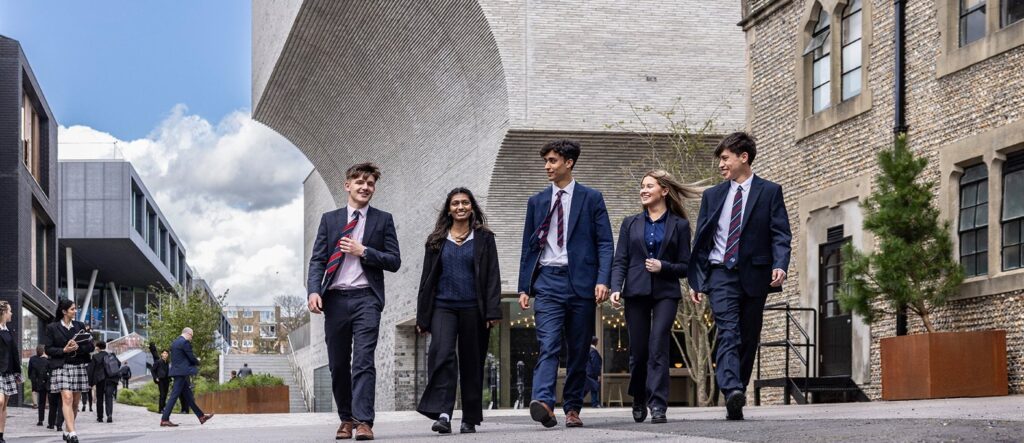
The episode closes on a question about legacy: what does Waterman hope a Brighton College Bangkok Vibhavadi graduate remembers about the campus, decades from now? Not an academic lesson, he says, but a feeling — that this was a place where they discovered who they could become, and a lasting sense that they used to belong here. If a graduate can walk back through the doors one day with pride, gratitude and a genuine sense of belonging, Waterman says, “then I think we’ve done our job.”
Listen to the full conversation between Justin Hardman and Crispian Waterman on Education Vanguard
Subscribe wherever you get your podcasts to catch every episode spotlighting ASEAN School Awards winners and finalists.
Curious about the Public Choice Award for Innovative Facilities, or how your school’s story could be featured next? Explore the ASEAN School Awards.
Reach out to Justin Hardman at jahardman@21c-learning.com if you’re keen to be featured.



 LinkedIn
 X
X
 WhatsApp
 Bluesky
 Telegram
 Facebook